Wool Matters…Drape, Durability, Sourcing
When designing a scarf or wrap, our weaver looks at wool type, wool weight, and weaving pattern to determine drape, feel, and durability of the finished garment. How the completed garment will drape and feel against the skin will determine the use as outerwear on top of another garment or against the skin. The weaving design and drape help determine the environment for wear such as home indoor use, outside yardwork, or at a fancy social event or outing in your Sunday best. Regardless of purpose, our wool handweaves provide warmth that last the test of time in both style and performance!
Wool Basics
So, what is wool? It is the soft wavy or curly usually thick undercoat of various hairy mammals and is made up of a matrix of keratin fibers and covered with minute scales. These fibers are combed and twisted into yarn threads to make fabric via weaving, knitting, crocheting, or even felting. Wool is possibly the oldest fiber known to humans. It was one of the first fibers to be spun into yarn and woven into a fabric. Wool mostly comes from sheep but also from alpacas, camels, and goats, to name a few. Australia, Eastern Europe, New Zealand, and China are major wool producers. Interesting fact: The American woollen industry began in the Massachusetts settlements in 1630, where each household was required by law to produce wool cloth.
Wool is the most reusable and recyclable fiber on the planet. Wool has a long service life and is suitable for recycling to new textiles for clothing, resilient upholstery or products that call on its natural resistance to fire and temperature extremes. Wool can be used in industrial applications such as thermal and acoustic insulation or in pads to soak up oil spills. When disposed, natural fibers such as wool reduce the impact of the textile industry on pollution and landfill build-up as wool biodegrades rapidly through the action of fungi and bacteria to essential elements (i.e. Nitrogen and Sulphur) for the growth of organisms as part of natural carbon and nutrient cycles.
At Mann Weaving we use merino wool and worsted wool in several weights. Both of these are sheep-produced wools. Although many other wools are lovely to work with, such as alpaca and cashmere to name a few, merino and worsted wool provide the best product in terms of hardiness during the weaving process and luxury in the final garment.
Merino wool is produced from Merino sheep’s fur. It is soft and the smoothest of all the wool produced by sheep and is ideal for base layers and other similar clothes. It is found in a variety of hues, such as pastels, vivid tints, and multi-color strands.
Worsted wool is a high-quality type of wool yarn and a yarn weight category*. This very fine grade of wool can be easily woven and has a relatively long fiber length, making it very durable. It also drapes easily, making it an ideal fabric for all sorts of garments. Over the years, worsted wool has been a popular choice for men’s trousers, pleated skirts for women, and both men’s suits and sport jackets.
Some of the differences between merino and worsted wool include:
Fiber Length: Merino wool is made from shorter fibers, while worsted wool is made from longer and finer fibers.
Warmth and Water Resistance: Worsted wool has similar warmth properties to merino but is more water-resistant and retains its shape better over time.
Durability and Drape: Merino wool is often considered more durable and has a softer drape compared to worsted wool, which can be bulkier.
Fineness: The fineness of wool is measured by super numbers, with higher numbers indicating finer threads.
Wool weight is determined by the thickness of a strand, specifically the diameter. To determine this, wool is wrapped around a ruler for one inch without overlapping to determine Wraps Per Inch (WPI). WPI is categorized into a scale system as follows: 0/Lace is 30-40 WPI, 1/Superfine is 14-30 WPI, 2/Fine is 12-18 WPI, 3/Light is 11-15 WPI*, 4/medium is 9-12 WPI*, 5/Bulky is 6-9 WPI, 6/Super Bulky is 5-6 WPI, and 7/Jumbo is 1-4 WPI. If you knit or crochet you will know that this scale also recommends specific size needle or hook size to achieve a gauge of a certain number of stitches per inch. Knitters and crocheters will adjust the needle size when employing that yarn size depending on their tension and the pattern to ensure the size of the project is correct when completed. Handweaving is similar in the consideration of the yarn weight, weaving pattern, and weaver consistency on the warping of the loom and the weaving which results in the quality and size of the garment when complete.
*Note: The weight scale for categories 3 and 4 described above are often referred to as “light worsted” and “worsted” respectively. However, they are referring to size/weight of yarn and not necessarily fiber itself. You can purchase worsted weight acrylic and other non-wool fibers. This can be very confusing at times, so check the label to determine fiber type as well as weight!
Weaving Design
How tightly a garment is woven, combined with the weight of the wool impacts the drape. Generally, the number of ends per inch (thread count) or gauge will help you identify the tightness of the weave. Fineness of a fabric, including the smoothness of the fabric is determined by ends per inch. The more ends, the more luxurious and expensive the product. Additionally, the higher the number of ends per inch, the more durable the fabric regardless of yarn weight. The drape, how stiff or flexible a fabric feels, is affected by both the number of ends per inch and the weight of the yarn. A heavier weight yarn with a high number of ends per inch will be stiffer, whereas a lighter weight yarn with the same number of ends per inch will be more flexible.
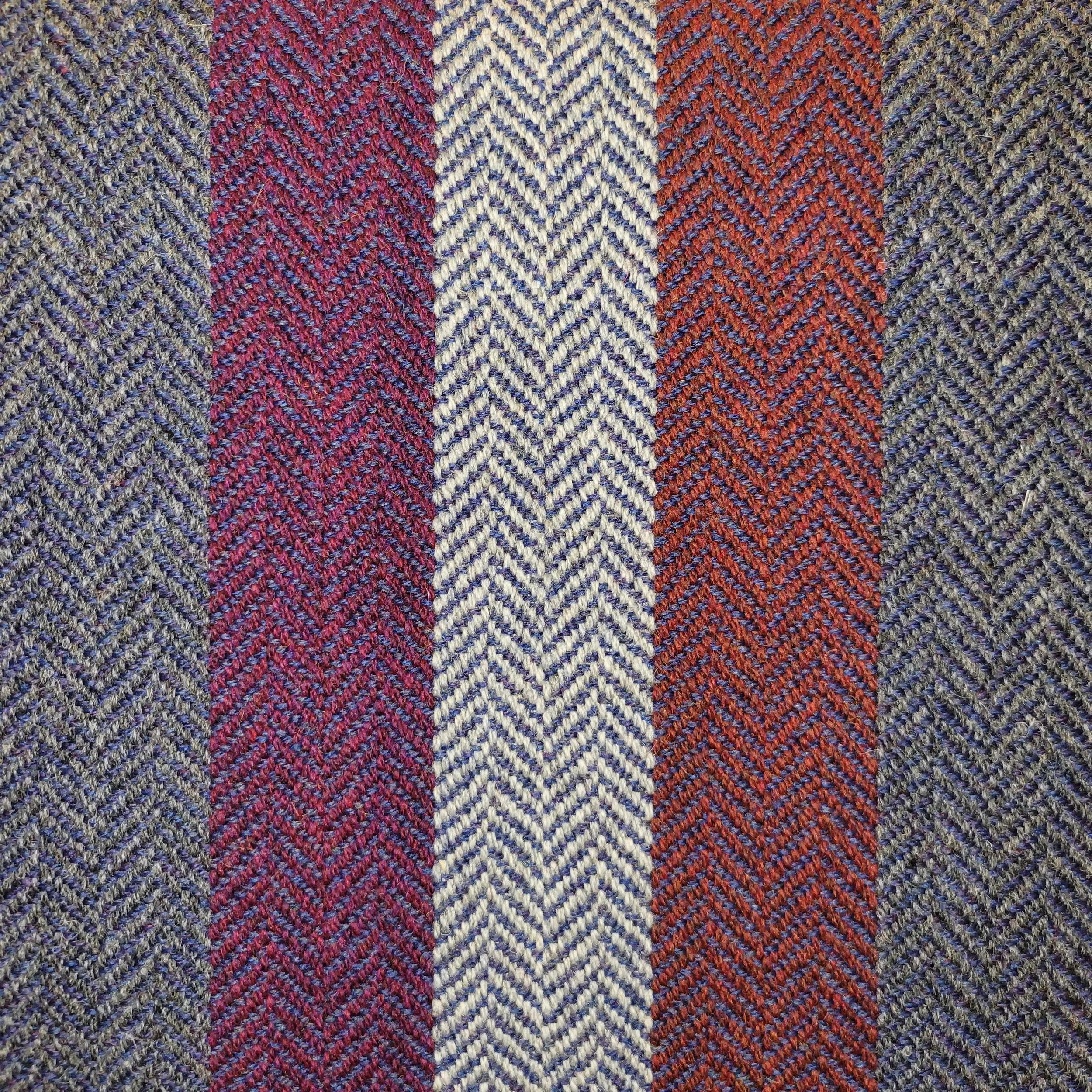
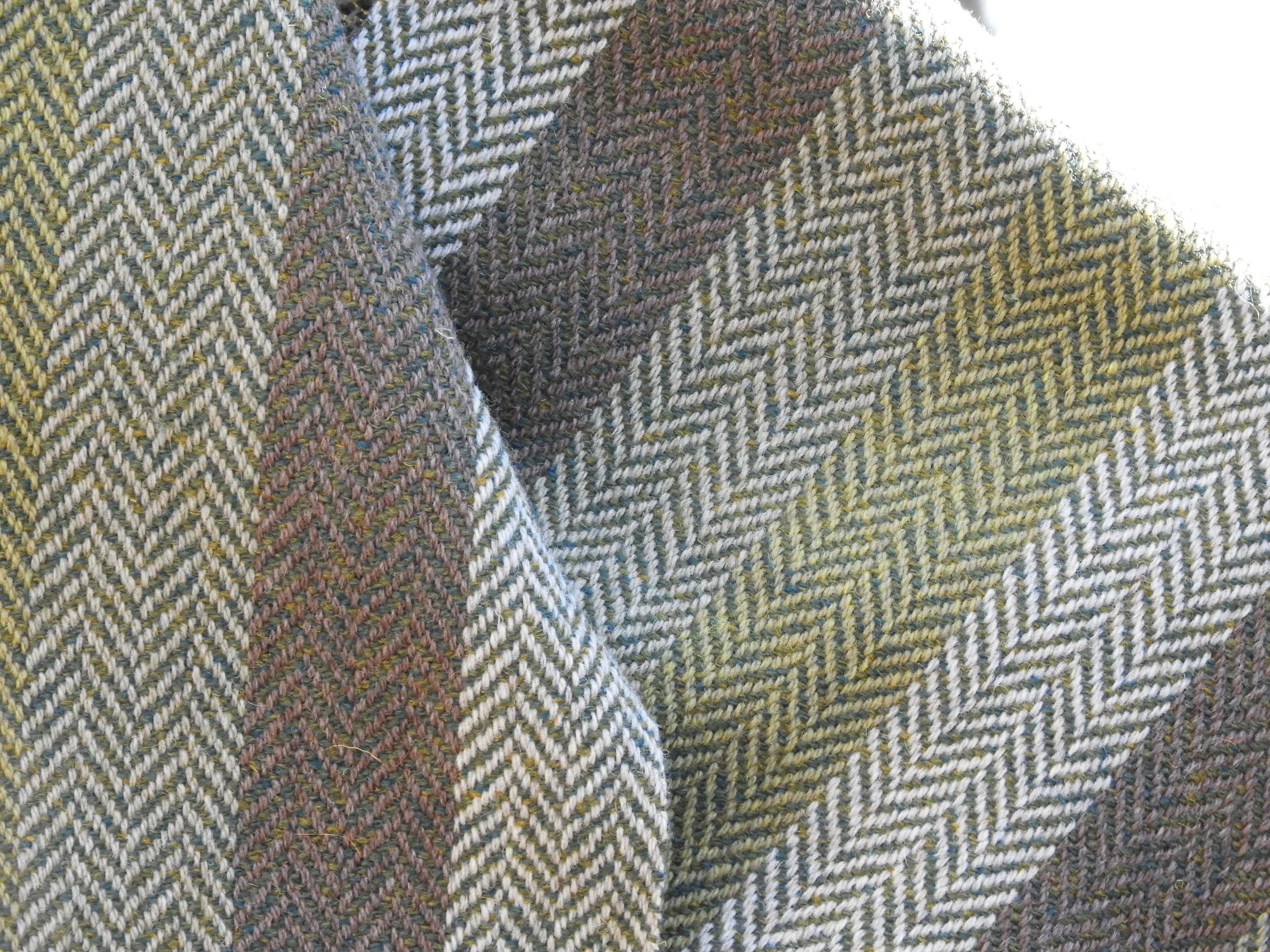
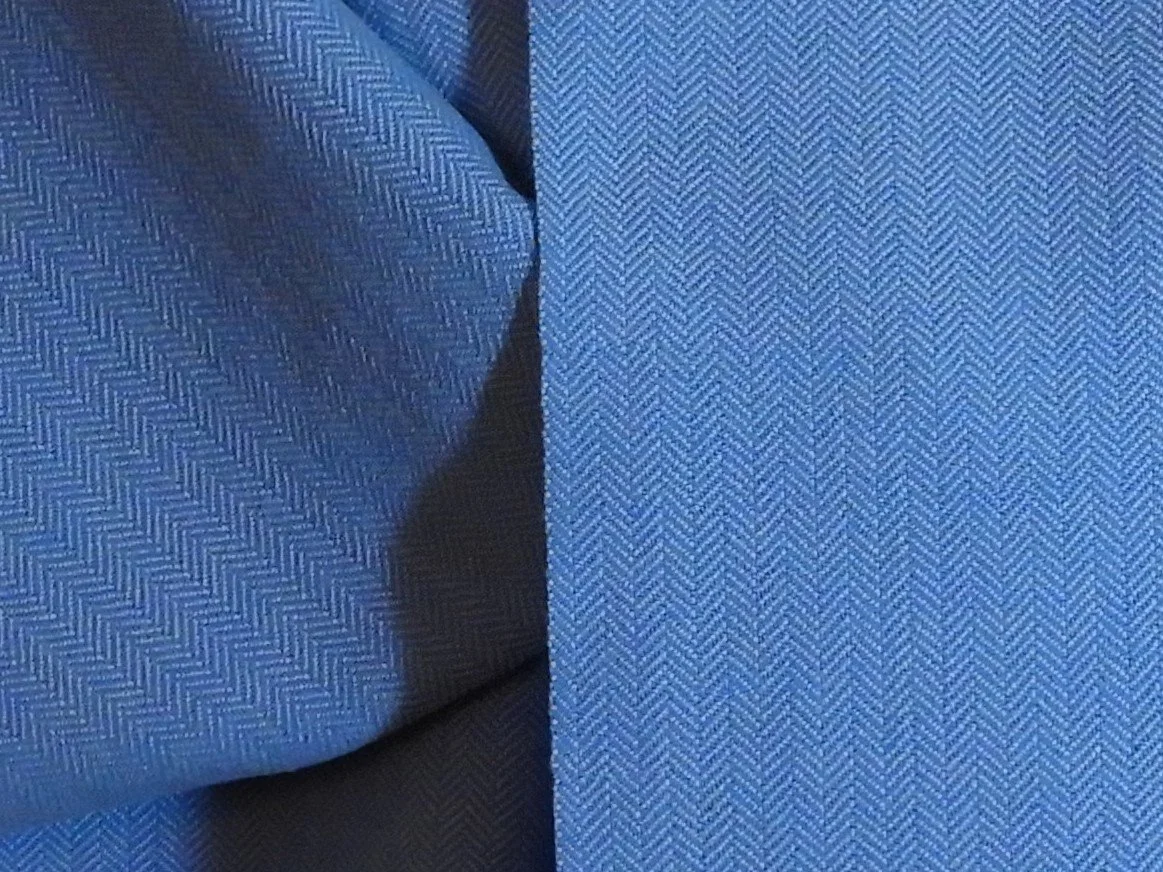
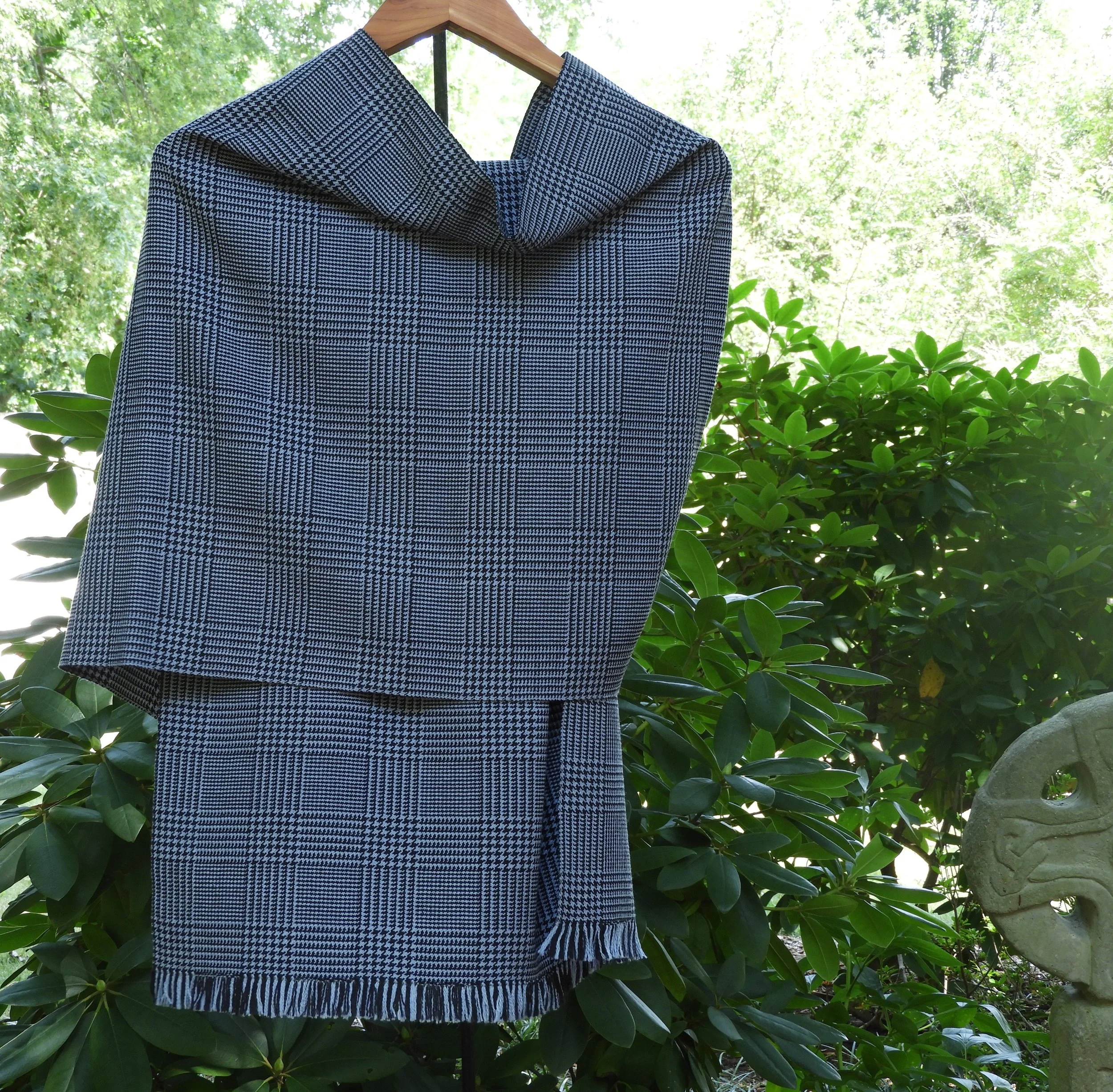
At Mann Weaving, we use a variety of weave patterns such as herringbone, 2/2 twill, broken twill (offset herringbone) and basic plain weave to achieve the desired drape in our tartan, plaid, and tweed products. Plain weave (under/over for all stitches) forces all threads to touch and creates a more dense, stiffer drape as you see in canvas clothing. Herringbone, 2/2 twill, and broken twill on the other hand, may have more ends per inch, but all threads are not touching at the scale of plain weave and therefore will have a more pliable drape. To achieve desired drape, we combine types of wool, yarn weight, and weave pattern to achieve scarf and wrap drape that ranges from rustic (worsted wool, yarn weight 3, in herringbone stitch) to fine (merino wool, yarn weight 1, 2/2 twill) as shown in the following photo gallery from left to right respectively.
Recommended Wear
Obviously, the feel of a garment and your personal preferences will determine how, when, and where you wear a garment. We provide you with information on our products details such as the type of wool and the number of stitches per inch to give you as much information as possible. Remember, all wools soften with use, so use them as much as possible!
Following is a rough guide from our perspective:
Worsted Wool in Yarn Weight 2 and 3 is normally an outer garment, as it is a thicker, stiffer fabric. Yarn Weight 1 can be used against the skin immediately with a fine drape but will take time to soften.
Merino Wool in any weight can be worn against the skin immediately and will also suit as an outer garment.
Wool Sourcing
The top five countries for wool production are China, Australia, New Zealand, Turkey, and the United Kingdom. The United States is 28th globally with ~10K Tons per year compared to China with 356K Tons. American wool is worth the search but is limited due to the small number of mills that take in sheared wool and produce yarn. The top states for wool production in the USA are Texas, California, Wyoming, Colorado, and Utah. More than half of American-produced wool is shorn and sold during April, May, and June of each year (right now!).
We hope this note has given you insight into Mann Weaving consideration/criteria for our garments as well as an appreciation of wool itself! Check back for future blogs and updated products. Back to weaving…